
Published in Conservation Letters in May 2024, this analysis* establishes a baseline for measuring marine protected area (MPA) quality and provides recommendations as the international community works toward the 30x30 goal established by the Convention on Biological Diversity's Kunming-Montreal Global Diversity Framework (Target 3).
* Paper analysis was completed in Feb 2023. To learn more about what has changed read here.
Report & Toolkit
Key Findings
1
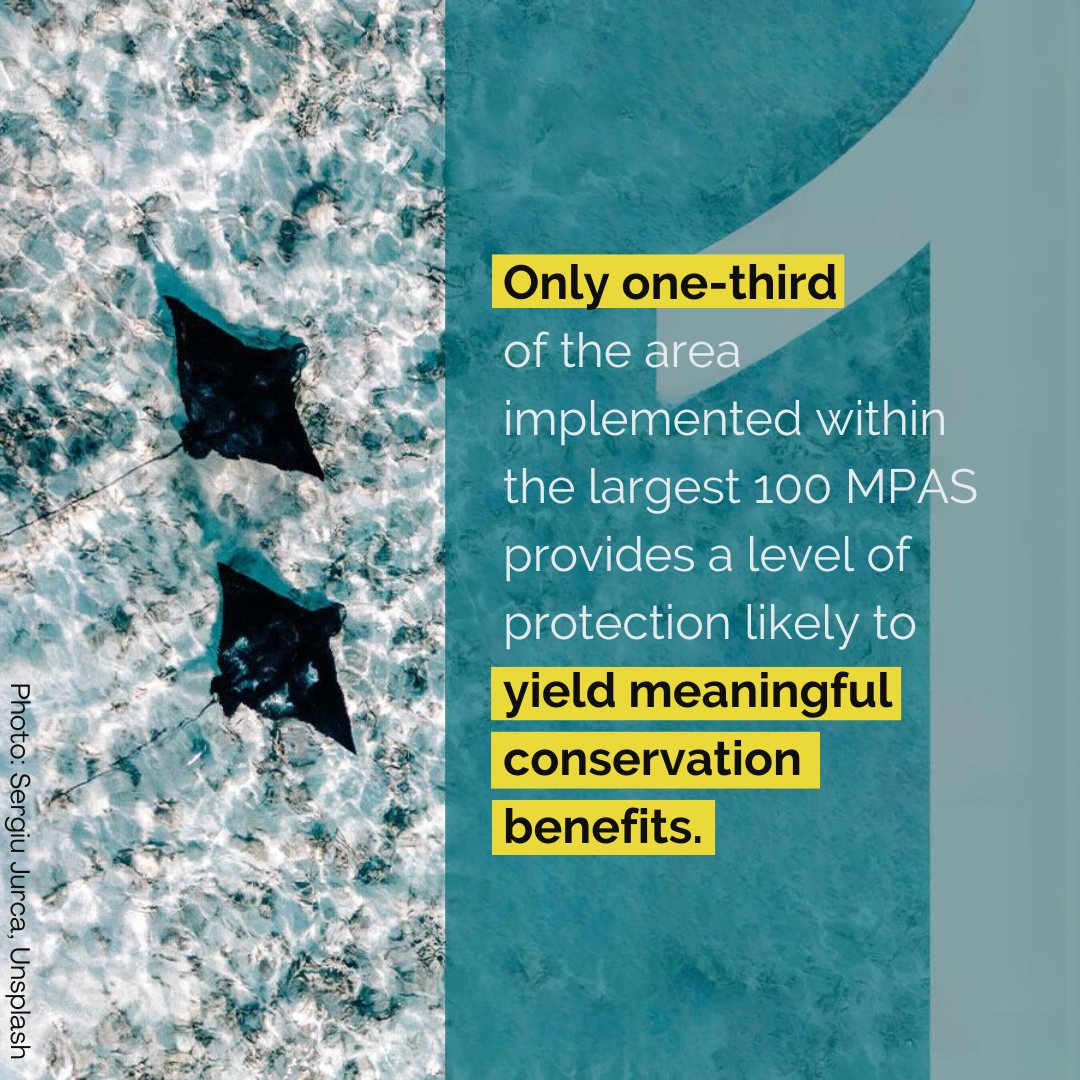
Only one-third of the area designated within the largest 100 MPAs provides a level of protection that is likely to yield meaningful conservation benefits.
2
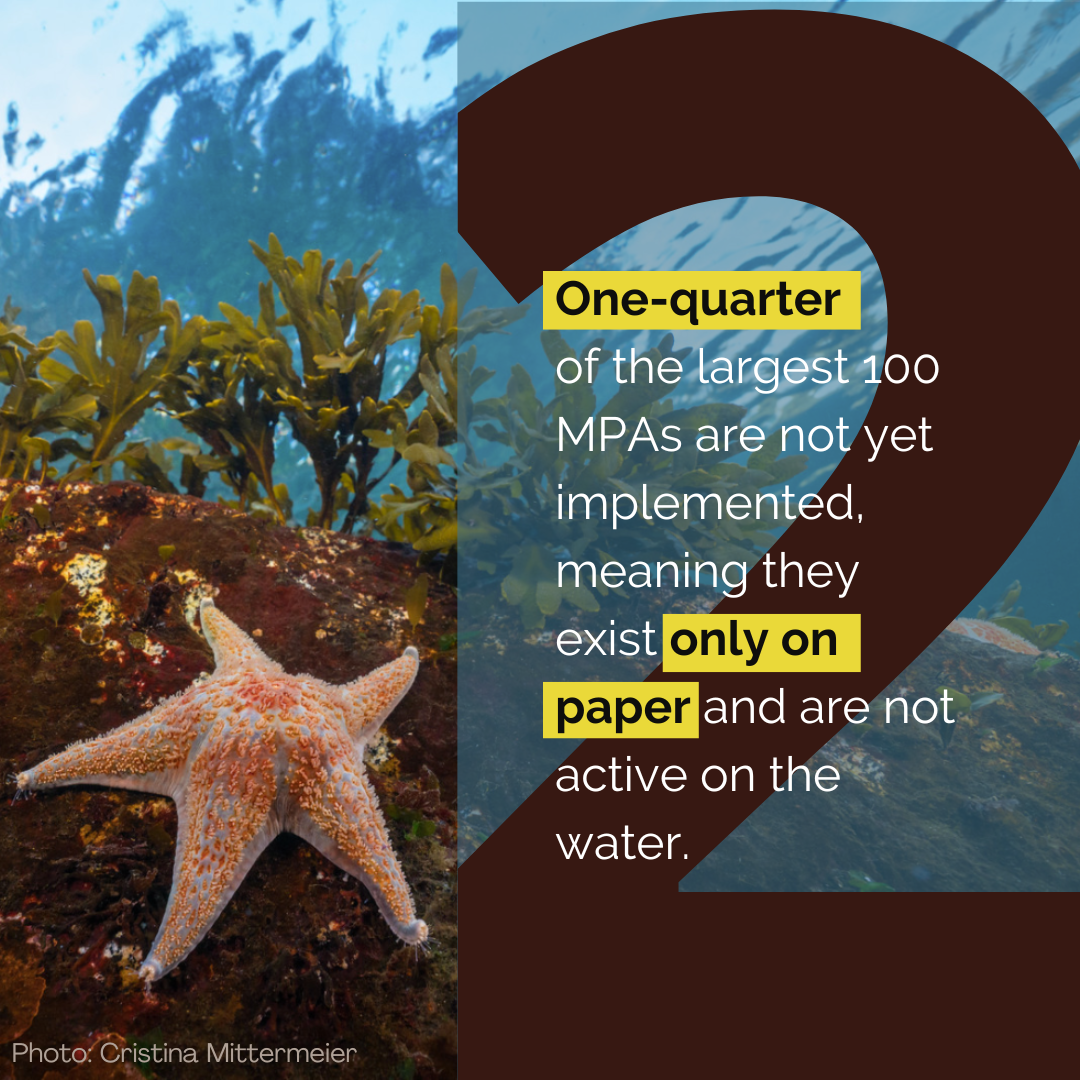
One-quarter of the largest 100 MPAs are not yet implemented, meaning they exist only on paper and are not active on the water.
3
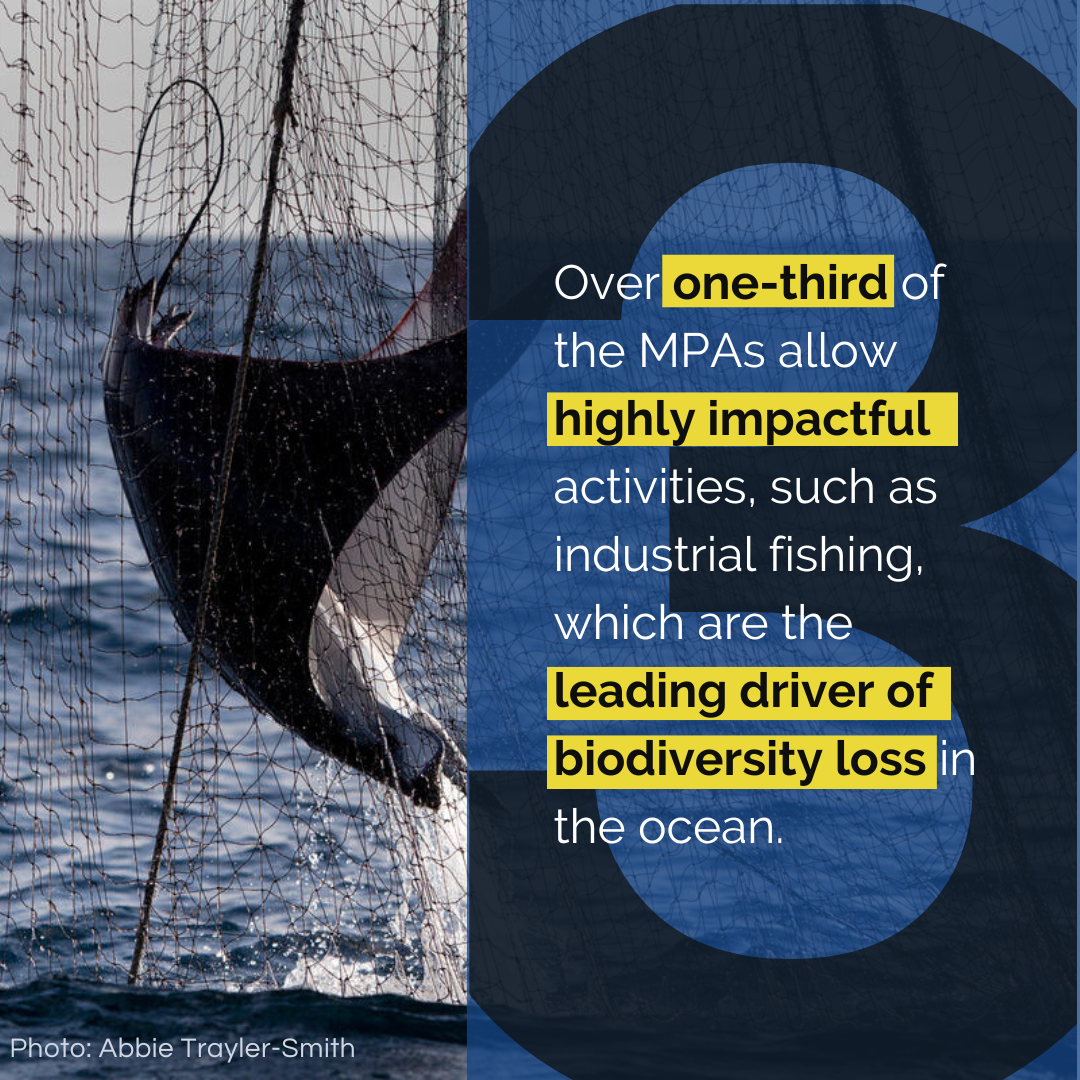
Over one-third of the MPAs allow highly impactful activities, such as industrial fishing, which are the leading driver of biodiversity loss in the ocean.
Policy Recommendations
1
Only MPAs that are Implemented or Actively Managed should be counted towards global targets.
2
Only MPAs that meet IUCN guidelines should be counted.
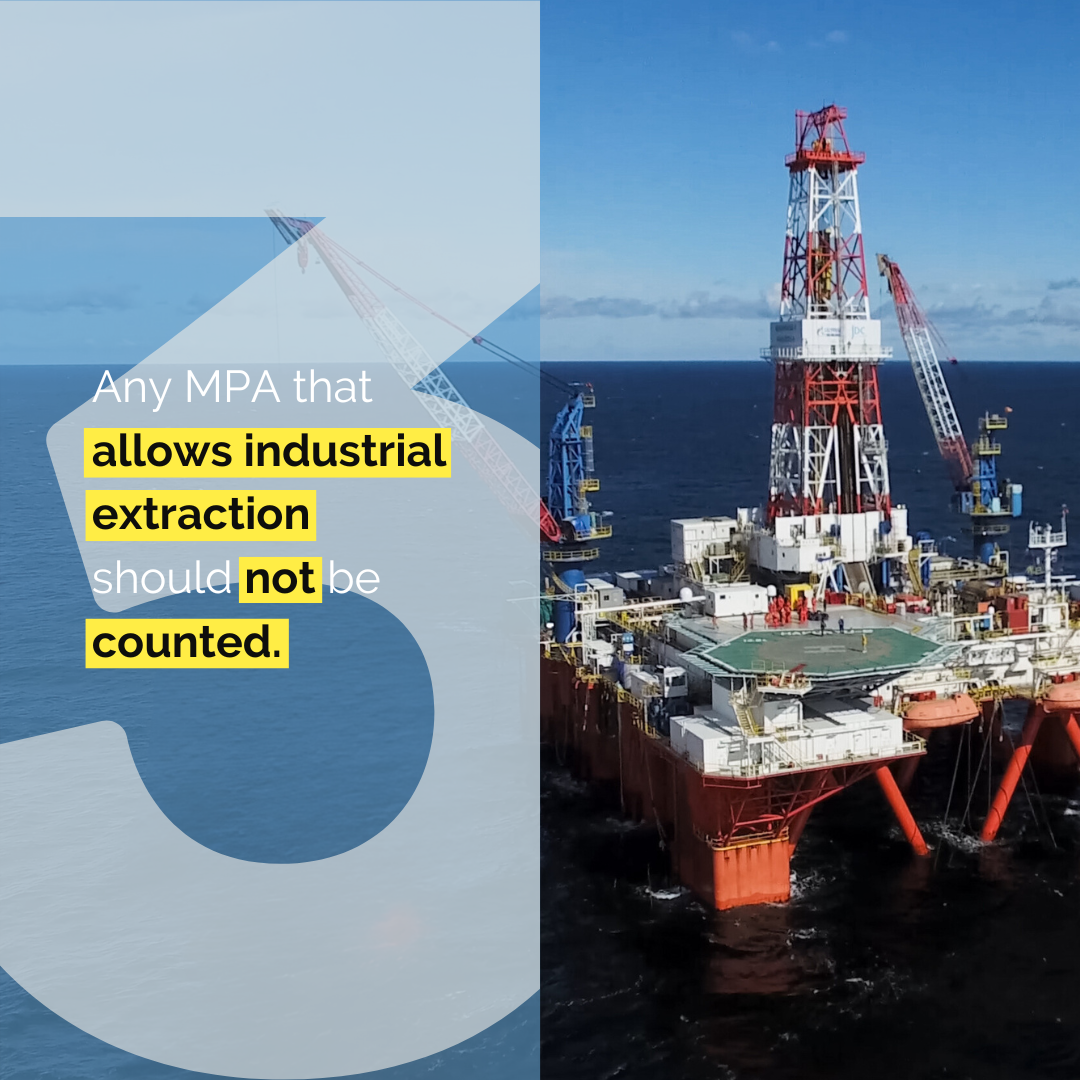
3
Any MPA that allows industrial extraction should not be counted.
4
Level of Protection is an important indicator that should be part of global reporting.
The 30x30 Target
The United Nations Convention on Biological Diversity, ratified by 196 parties, aims to increase biodiversity conservation on land and sea.
Target 3 of the Kunming-Montreal Global Biodiversity Framework (GBF) aims to protect at least 30% of global marine and coastal area in “effectively conserved and managed" areas by 2030, "ensuring that any sustainable use, where appropriate in such areas, is fully consistent with conservation outcomes.” This is known as the '30x30' target.

Measuring Progress Toward 30x30
The headline indicator for Kunming-Montreal Global Biodiversity Framework Target 3 is the coverage of protected areas and other effective area-based conservation measures.
Global protected area coverage is determined by the World Database on Protected Areas (WDPA). The WDPA is a global database of terrestrial and marine protected areas and is a joint product of the UN Environment Program and IUCN. As of February 2023, the WDPA reported that 8.2% of the ocean is protected.
However, the headline indicator and use of the WDPA is necessarily limited for several reasons:
- WDPA MPA data is largely self-reported, most commonly by national governments
- All MPAs are reported from the time of legal designation, regardless of whether the MPA is implemented on the water
- There is no differentiation between the types and strength of protections that different MPAs afford
While the WDPA's accounting tracks the coverage of all reported MPAs, this indicator does not account for other important elements of GBF Target 3 -- namely "effectively conserved and managed" and "consistent with conservation outcomes."
Therefore, the WDPA inherently overestimates progress toward 30x30. To truly understand where we stand and what needs to be done to achieve 30x30, we must not only focus on the quantitative goal but ensuring that these areas are effective and likely to accrue conservation benefits as outlined in GBF Target 3.
Connecting MPAs to Conservation Outcomes
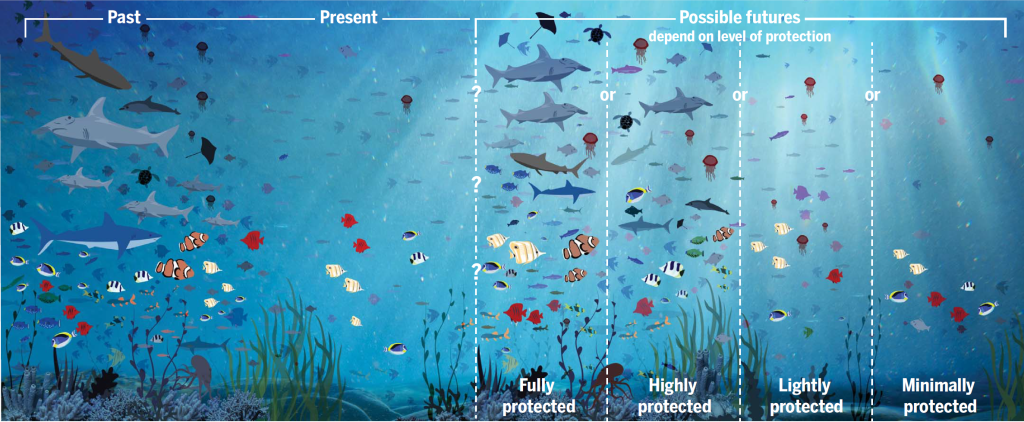
The MPA Guide is a science-based tool and framework to identify different types of MPAs and connect these types of MPAs with the outcomes they are expected to achieve. The MPA Guide categorizes MPAs along two axes – (1) Stage of Establishment and (2) Level of Protection.
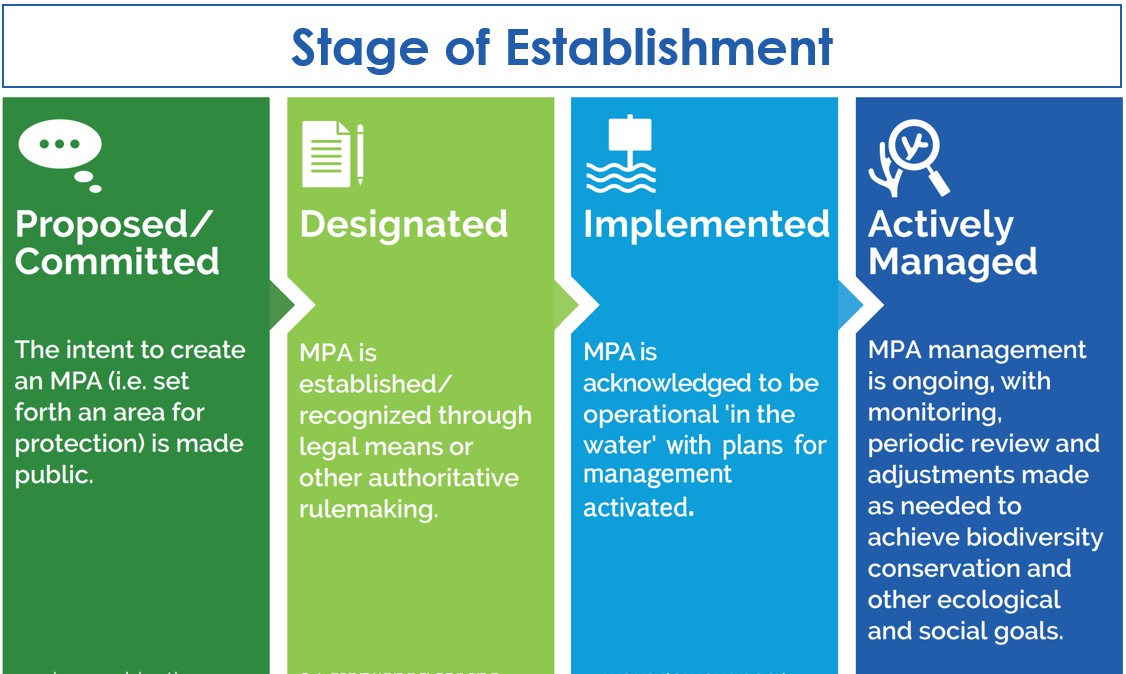
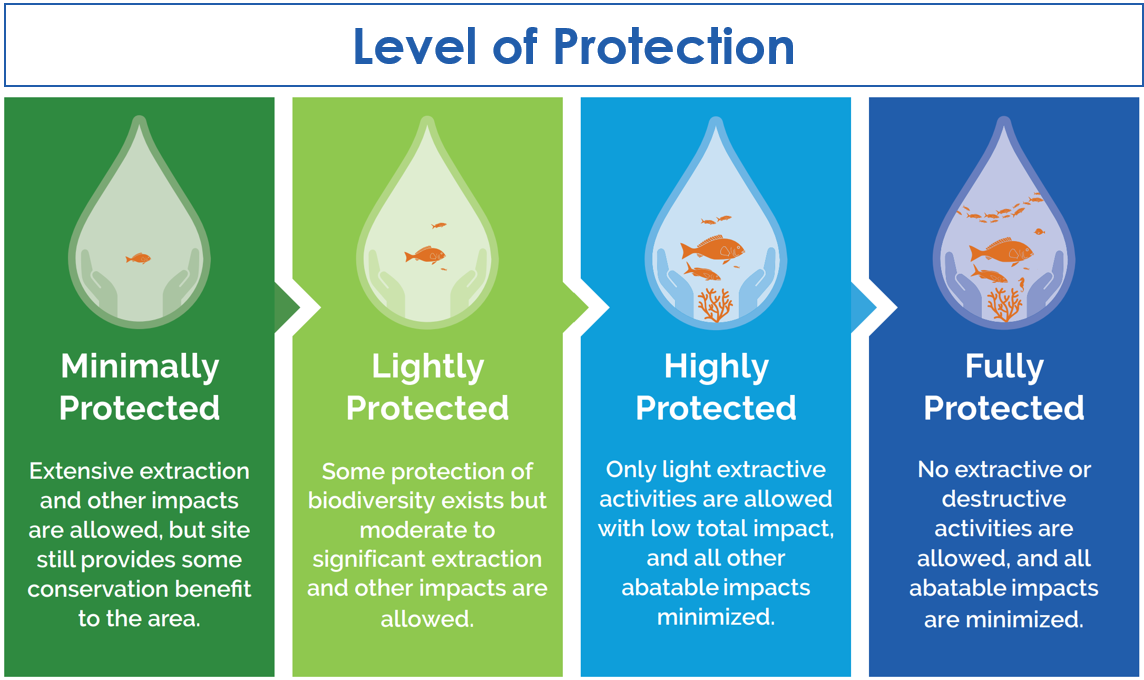
The MPA Guide links these elements to clarify what social and ecological Outcomes can be expected from an MPA at a particular Stage and Level, assuming key Enabling Conditions are in place.
- Dr. Kirsten Grorud-Colvert
Associate Professor at Oregon State University and lead author of The MPA Guide
The 100 Largest Global MPAs*
Explore the results of applying The MPA Guide to the 100 largest global MPAs (Pike et al. 2024), which account for nearly 90% of reported MPA area, provides an understanding of the expected conservation outcomes from current global MPA coverage. This provides a baseline for tracking ongoing progress toward the 30% coverage target, with a focus on the quality of protection.
*The analysis for the paper was completed in February of 2023. Please note that The MPA Guide evaluates the impact of current activities, not strictly regulations, so these assessments represent a snapshot in time. There have been changes to the data set since the paper analysis was completed. To see the current MPA dataset please check out the MPAtlas website.