
Protecting the Ocean Twilight Zone
The Ocean Twilight Zone, or Mesopelagic Zone, extends from 200 to 1,000 meters below the ocean’s surface. Though it makes up just 20% of the ocean’s volume, it may contain up to 90% of all fish biomass, forming a vital link between surface waters and the deep sea.
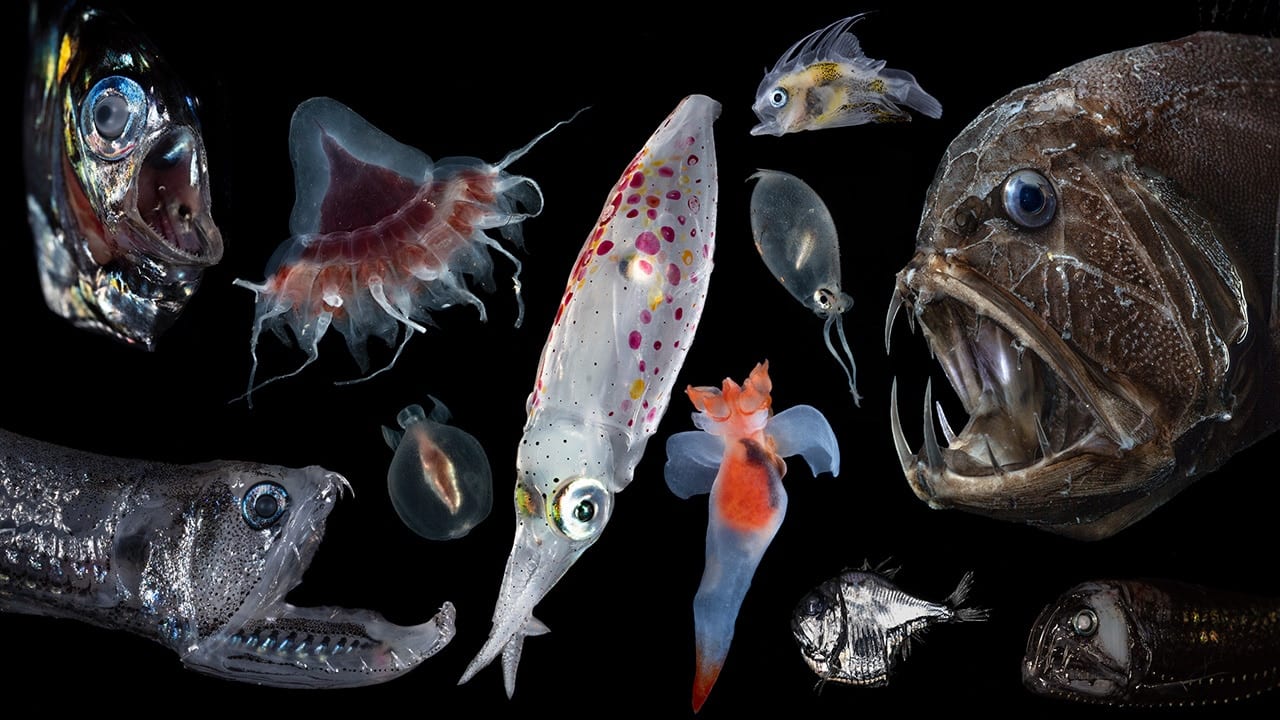
IUCN Motion 035: Protection of Mesopelagic Ecosystem Integrity
To be voted on at the World Conservation Congress in Abu Dhabi, October 9-15, 2025
What does Motion 035 call for?
Marine Conservation Institute, in partnership with The Ocean Conservancy and the Environmental Defense Fund, submitted a motion to the International Union on the Conservation of Nature (IUCN) 2025 World Conservation Congress. The motion calls for a precautionary pause on any expansion of fishing or other activities that may impact the mesopelagic zone until the following are in place:
- we understand the structure and function of mesopelagic communities;
- we establish rules to prevent mesopelagic fisheries that are unregulated, unassessed or otherwise inconsistent with international legal obligations;
- projects (fishing, deep-sea mining, geoengineering) demonstrate that they will have no adverse impacts; and
- mesopelagic fisheries provide regular, transparent reports of catch and bycatch levels.
Motion Co-Sponsors include: Misión Tiburón, Coral Triangle Center, Center for Biological Diversity, Blue Marine Foundation, Natural Resources Defense Council, The Pew Charitable Trusts, Under the Pole, Fundación MarViva, Conservation International, The Western Indian Ocean Marine Science Association, MigraMar, the Australian Marine Conservation Society, and BirdLife International.
What’s happening with the motion right now?
- March 26: The motion was accepted as is by the IUCN motions working group
- April 23 to June 23: IUCN members commented on the motions that were accepted through the IUCN Portal, and Amendments were proposed.
- October 9 to 15: Motion 035 will be voted on at the World Conservation Congress in Abu Dhabi, UAE. The motion will be discussed virtually in contact groups from October 9-12, and voted on at the Member's Assembly from October 13-15.
How can you help support Motion 035?
IUCN Members:
- Participate in contact groups to support Motion 035, which will be debated virtually from October 9-12 at WCC 2025. Contact groups provide an opportunity to reach a consensus text that is consistent with the original intent of the motion.
- Express your support and Vote YES on Motion 035 at the WCC Member's Assembly from October 13-15.
- Oppose Amendment 1, a proposed change that weakens the original intent of Motion 035 and detracts from its conservation benefits.
- If you are unable to attend the Congress, please provide your proxy vote to an IUCN Member in attendance.
- Marine Conservation Institute, Ocean Conservancy, and Environmental Defense Fund welcome your ideas on how to strengthen the motion! Please contact lance.morgan@marine-conservation.org with your proposals.
Non-IUCN Members:
- Share this one-pager with IUCN member countries and organizations.
- Encourage IUCN Members to voice their support at the Congress in October, participate in contact groups, and VOTE YES during the Member's Assembly.
Why is the Mesopelagic Zone Important?
- Unique Biodiversity: This zone hosts a huge variety of species, most of which remain undiscovered.
- Essential Food Source: Many top predators—like sharks, tuna, swordfish, and marine mammals—depend on mesopelagic creatures such as jellyfish, squid, shrimp, and fish.
- Climate Regulation: Each day, billions of mesopelagic animals migrate to the surface to feed, transporting carbon back down and helping sequester 2–6 gigatons of carbon annually—more than double the emissions from all cars worldwide. Most of this carbon stays in the twilight zone or sinks even deeper, reducing atmospheric CO₂.
Why is Action Needed?
Expanding fisheries into the mesopelagic zone could harm ocean ecosystems and weaken climate resilience. As traditional fish stocks decline due to climate change, industries are eyeing mesopelagic species, like lanternfish, for their omega-3 content. Meanwhile, the zone is already threatened by warming, deoxygenation, and deep-sea mining, which can cause toxic pollution.
To learn more about the mesopelagic zone and Motion 035, watch this webinar hosted by our colleagues at the Environmental Defense Fund:
Join us in advocating for the protection of the Ocean Twilight Zone, ensuring a healthier ocean for future generations.

Marine Conservation Institute Applauds the High Seas Treaty for Winning the 2025 Earthshot Prize for Ocean Protection
News Release Marine Conservation Institute Applauds the High Seas Treaty for Winning the 2025 Earthshot Prize for Ocean Protection By Marine Conservation Institute | November 6, 2025 Marine Conservation Institute congratulates the High Seas Alliance (HSA) on accepting the 2025 Earthshot Prize in the “Revive Our Oceans” category on behalf of the High Seas Treaty (also…
Marine Protection Atlas Supports Data-Driven Conservation Planning Through Integration into the Global Fishing Watch Marine Manager
Last week, ocean advocates from around the globe came together at the third UN Ocean Conference (UNOC3) in Nice, France, to accelerate action towards UN Sustainable Development Goal 14 and mobilize all actors to conserve and sustainably use the ocean. So, what was accomplished for ocean conservation? Here’s our recap of some of the major announcements and commitments from the week and their significance for the ocean conservation movement.
Marine Conservation Institute Commends IUCN’s Commitment to Protecting the Ocean’s Twilight Zone
News Release Marine Conservation Institute Commends IUCN’s Commitment to Protecting the Ocean’s Twilight Zone By Marine Conservation Institute | October 14, 2025 Today, the International Union for Conservation of Nature (IUCN) voted to pass Motion 035, “Protection of mesopelagic ecosystem integrity,” at the World Conservation Congress in Abu Dhabi. This landmark decision calls for applying a…