
By Marine Conservation Institute | September 19, 2025
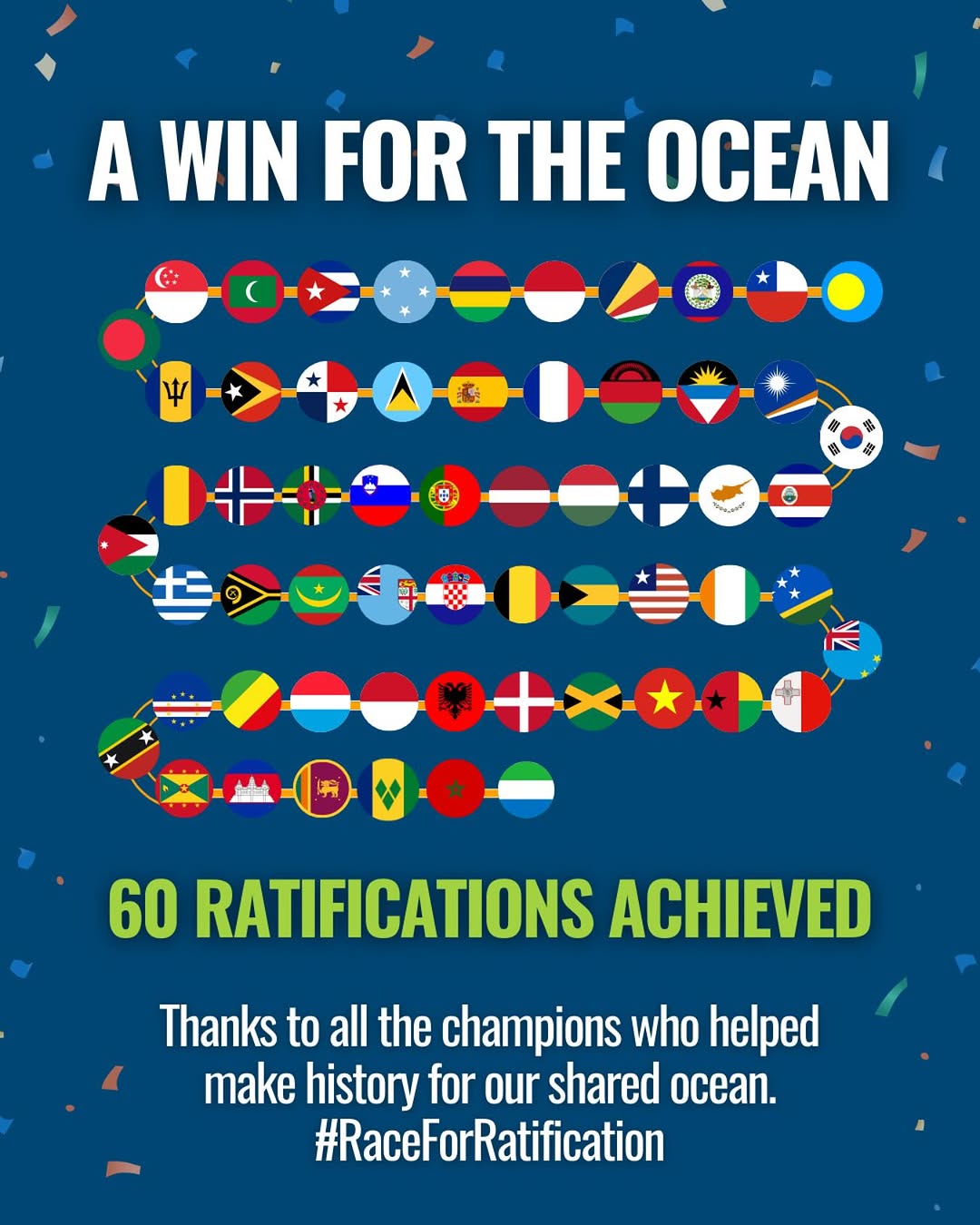
Today, the global conservation community achieved a historic win for ocean conservation. At the 80th United Nations General Assembly (UNGA) in New York City, the final countries—including St Vincent and the Grenadines, Sierra Leone, and Morocco—deposited the ratifications needed to bring the historic High Seas Treaty—or Biodiversity Beyond National Jurisdictions (BBNJ) Agreement—to a total of 61 ratifications by countries. With this threshold reached, the treaty officially enters into force 120 days from today in January 2026 and becomes international law.
What are the High Seas, and why are they worth protecting?
The High Seas, which encompass the area of the ocean beyond countries’ Exclusive Economic Zones (EEZs), make up 90% of the ocean’s volume, nearly two-thirds of the total ocean area, and half of our planet’s surface. Often, when we think of the open ocean or “international waters,” we think of a vast expanse of lifeless water—a desert at sea.
But this could not be further from the truth. The High Seas are home to an incredible abundance of biodiversity. These waters contain deep sea seamounts bustling with rare and fragile forms of marine life, expansive, lush seagrass meadows, colorful deep-sea corals, and massive aggregations of migratory species such as whales, seabirds, sharks, and tuna. It is also an incredibly important part of the ocean-climate system, with the largest migration of animals on the planet rising from the mesopelagic zone (or “Ocean Twilight Zone”) each night, bringing an estimated 2-6 gigatons of carbon back into the deep ocean where it is locked away for thousands of years.
And while the High Seas may seem out of reach (and therefore safe from the threats of human activity), they face many of the same—and several unique—threats compared to coastal ecosystems, including harmful fishing practices at an unsustainable scale, shipping, plastic and nutrient pollution, recent threats from deep sea mining and other geoengineering projects, and the multitude of negative impacts caused by climate change: warming waters, lower oxygen levels, and increasing acidity. Protecting the High Seas may seem out of touch with the everyday needs of humans, but it is increasingly vital to ensuring our collective future.
Why is the High Seas Treaty historic?
Until this point, no globally encompassing international treaty has enabled countries to propose formal area-based management tools (ABMTs) including marine protected areas (MPAs) to protect the high seas. To date, conservation efforts have been hindered by requirements to seek separate sector-by-sector regulations. Once the treaty enters into force in January, the process of establishing the treaty’s implementation mechanisms, including specialized committees, the Secretariat, and a Clearing House Mechanism to allow for transparent information transfer, will begin. Once these pieces are established, slated to be discussed throughout the third Preparatory Commission in March 2026 (PrepCom 3) and the first Conference of the Parties (COP) by January 2027, countries that have ratified the treaty will be able to:
- Establish protections (including MPAs) on the High Seas, protecting vulnerable areas such as seamounts and other biodiversity hotspots
- Share profits and other benefits from commercial products sourced from the High Seas (also called “marine genetic resources”)
- Mandate programs to level the playing field for marine research and technology for countries in the Global South
- Require Environmental Impact Assessments for harmful activities on the High Seas (even those occurring outside of protected areas)
These four components (which almost represent four mini treaties in themselves)—if implemented effectively—will ideally allow for strong protections for biodiversity on the High Seas while centering the equitable involvement of countries and populations historically underrepresented in multilateral processes, including Indigenous Peoples and Local Communities.
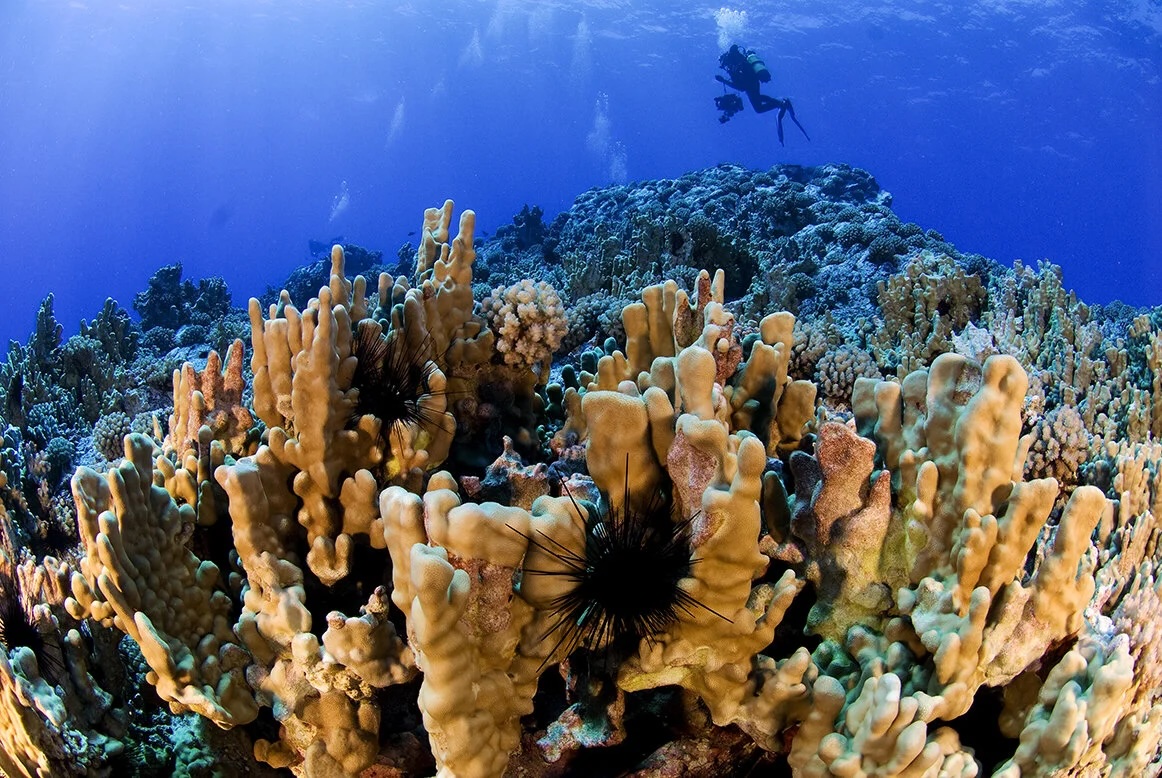
Notably, establishing High Seas MPAs represents one of the only remaining pathways to reach the global target of protecting 30% of the ocean by 2030 (per the Kunming-Montreal Global Biodiversity Framework, Target 3). Current ocean protection levels stand at 9.6% as reported by the World Database on Protected Areas (WDPA), and our own analysis at Marine Conservation Institute critically indicates that only 2.9% of the ocean exists in areas that are fully or highly protected. On the High Seas, current protection levels are less than 1%. With the High Seas Treaty in place, Marine Conservation Institute and our allies are working to increase the amount and quality of these protections within the next few years by ushering in the first generation of strong, effectively managed MPAs implemented in areas beyond national jurisdiction.
What happens next?
While reaching 60 ratifications represents a major milestone for the High Seas Treaty, the work is just beginning. To ensure effective, equitable, global implementation, the ultimate goal is to achieve universal ratification, where all UN countries ratify the treaty to both ensure they are bound to its requirements and to provide everyone with a seat at the table during future COPs. Countries that sign the treaty (without ratification) are still committing to its provisions, but there is less of a legal requirement to uphold its measures. The treaty will close for signature on September 20th. Currently, 143 countries have signed.
The next major convening for the High Seas Treaty will be Prepcom 3 held in New York in March, followed by the first COP sometime later in 2026 (or early 2027), where it is likely that the first proposals for High Seas MPAs will be submitted—many of them by countries part of the “BBNJ First Movers” group led by Chile.
At Marine Conservation Institute, we are determined to continue our decades-long efforts in advancing strong, effective, High Seas protections, including by promoting Motion 035: Protection of Mesopelagic Ecosystem Integrity at the World Conservation Congress in Abu Dhabi this October, improving and updating our High Seas Protection Tracker—a tool which tracks current protections and relevant information for High Seas regulations—and contributing our scientific expertise to the development of the first generation of High Seas MPAs to ensure that they are fully and highly protected, achieving the greatest benefits to biodiversity and people. As a member of the High Seas Alliance, the Deep Sea Conservation Coalition, and the Coral Reefs of the High Seas Coalition, we have already begun collaborating with our partners on crucial groundwork for these inaugural efforts and will be sharing updates on our expanded High Seas program in the coming weeks and months.
In a moment where the global conservation community faces increasing political challenges both at home and abroad, the High Seas Treaty represents a major reason for hope and inspiration for the future of our ocean and ourselves.
Join us to ensure this landmark agreement translates to real protections on the water for us and future generations!
For more information on our High Seas work, visit: marine-conservation.org/high-seas/