Photo Credit: Single Fin Photo / Ocean Image Bank
| November, 2025
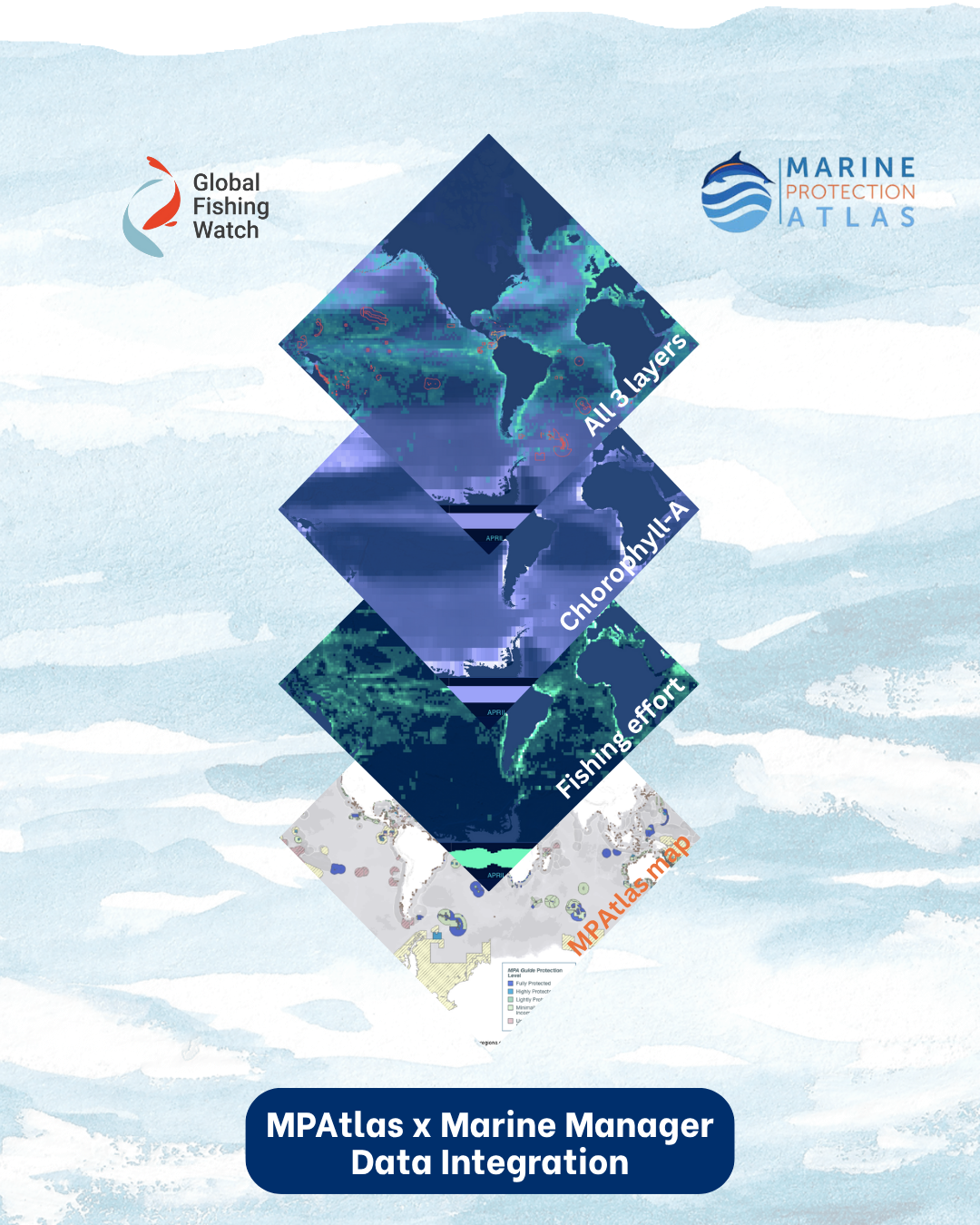
Marine Conservation Institute and Global Fishing Watch proudly announce their collaboration to feature Marine Protection Atlas (MPAtlas) data on Marine Manager. This strategic partnership will allow management authorities and decision makers to understand where marine protected areas (MPAs) have been assessed for quality and how likely current marine protection is to achieve conservation outcomes. This information is critical to support future planning, policy making, and management actions.
"The direct impact of human activity is critical to evaluating the effectiveness of MPAs to deliver biodiversity benefits. The MPAtlas layer allows Global Fishing Watch users to see how establishment and protection of MPAs relates to the amount of human activity in these areas,”
said Beth Pike, Director of the Marine Protection Atlas at Marine Conservation Institute.
Human activities are placing tremendous pressure on marine ecosystems. Marine protected areas (MPAs) can be incredibly effective tools for protecting and revitalizing the ocean, which is reflected in the international target to protect 30% of the ocean by 2030 (“30x30”). However, their benefits are often hampered by lack of implementation or weak protection. A recent report, led by Marine Conservation Institute, established a global baseline for 30x30, finding that one quarter of the area in reported MPAs is not implemented and an additional third of the area in reported MPAs continues to allow destructive, industrial-scale activities that are not compatible with conservation outcomes.
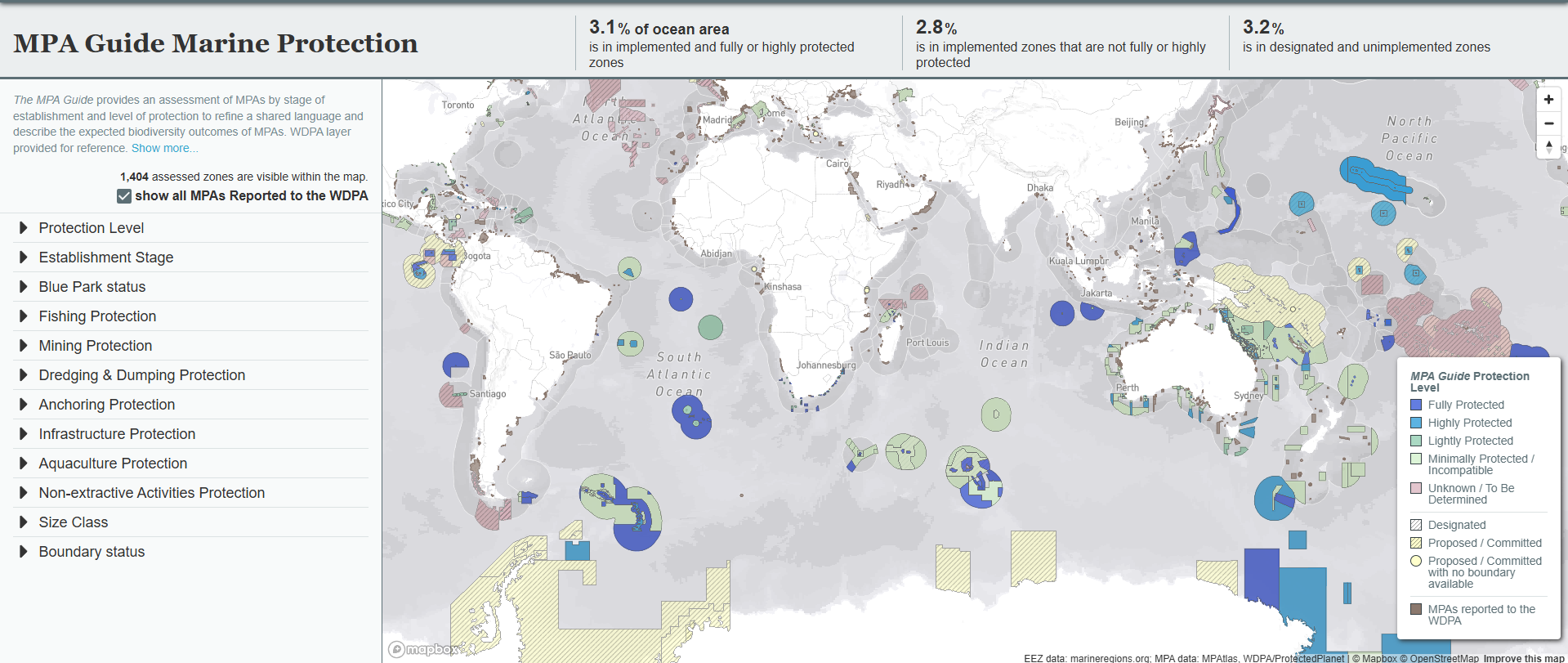
In 2012, Marine Conservation Institute launched the Marine Protection Atlas (MPAtlas) to track and report on global marine protection with an emphasis on quality, in addition to quantity. MPAtlas employs The MPA Guide, a science-based framework that categorizes MPAs based on their Stage of Establishment and Level of Protection to connect them to the biodiversity outcomes they are expected to achieve. Fully and highly protected areas are linked to the greatest conservation benefits, and MPAtlas reporting focuses on these MPAs that will meaningfully benefit biodiversity. Reporting the amount of fully or highly protected area counted towards global conservation progress provides a clear understanding of real progress and emphasizes the importance of MPA effectiveness in conservation goals. As of October 2025, MPAtlas reports that only 3.1% of the global ocean is fully or highly protected.
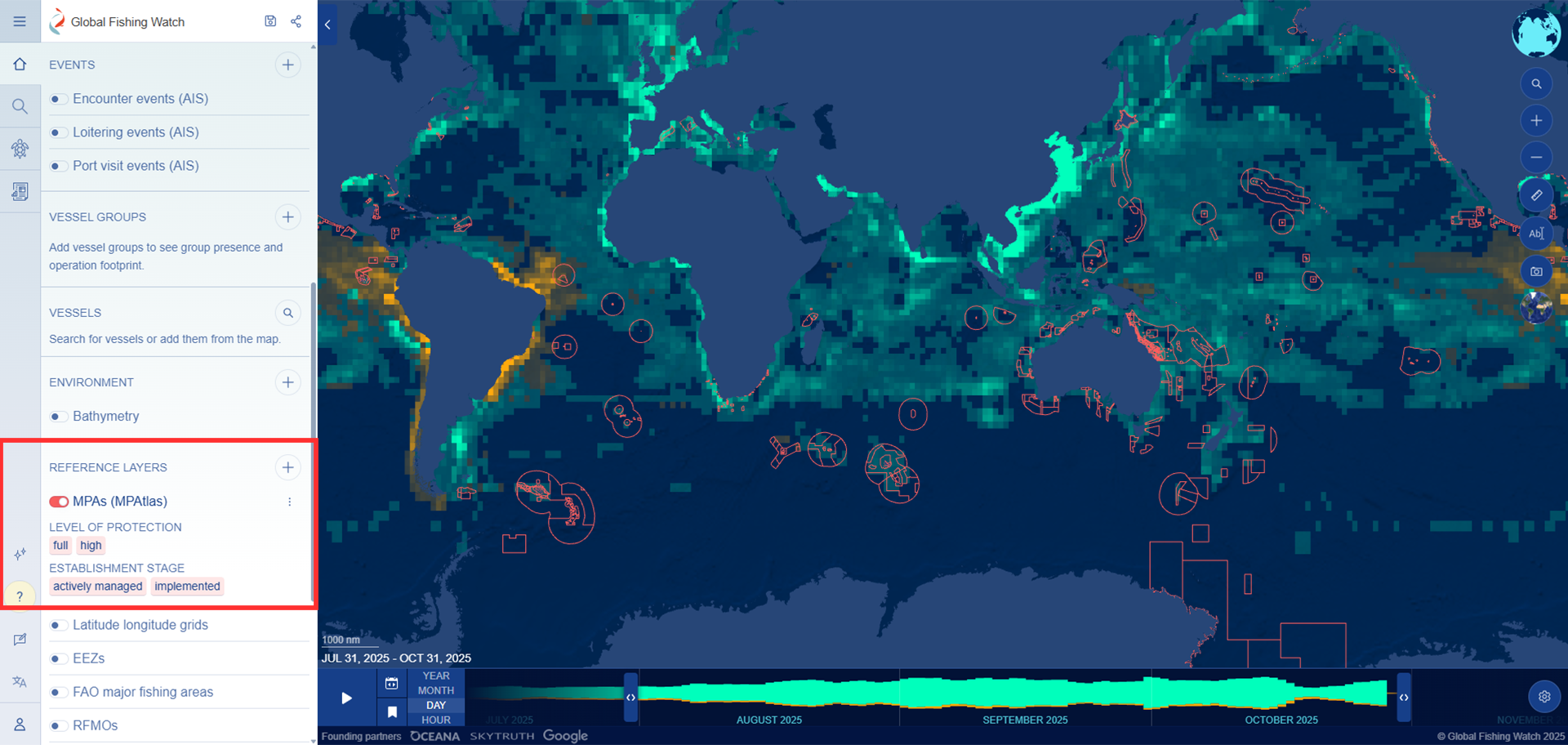
Global Fishing Watch’s Marine Manager platform, developed in partnership with Dona Bertarelli Philanthropy, seeks to use innovative technology to improve insight into MPAs, supporting science-based decision-making, management, and monitoring. It allows users to rapidly collate, visualize, and analyze scientific data on human use and oceanographic conditions to facilitate informed decision-making and stewardship. The portal displays key metrics like the apparent fishing effort, vessel activity, sea surface temperature, and habitat layers. Providing managers and decision-makers with adequate information in near-real time can facilitate the necessary improvements for the successful implementation and management of MPAs.
Integrating MPAtlas data into Marine Manager will allow users to consider and visualize where MPAs have been evaluated for their level of protection from direct human impacts. Since the Level of Protection and Stage of Establishment are directly derived from the patterns of human use, particularly over time, MPAtlas data allows users to have a more holistic picture of their local or regional marine protected areas and more directly connect the strength of protection to human actions and environmental outcomes on the water.
"Adding MPAtlas to the Marine Manager layer library significantly enhances the platform by providing clear assessment data on MPA implementation status and the level of protection for users, enabling better understanding for those working to manage and protect vulnerable marine ecosystems,”
said Charles Kilgour, Director of Program Initiatives, Global Programs at Global Fishing Watch.
Ensuring that MPAs effectively protect biodiversity is critical to truly achieving the 30x30 target. By sharing MPAtlas data on Marine Manager, Marine Conservation Institute and Global Fishing Watch empower users to consider the quality of protections and turn information into action. To explore the data, check out Marine Manager or the Marine Protection Atlas. Click here to learn more about how to contribute to the Marine Protection Atlas.